
AISI 316L contains about 2 to 3% molybdenum, which 304 does not. That is why it resists chlorides, brine and acids better, and it is the standard in pharmaceutical and cosmetic applications. The "L" means low carbon (max. 0.03%), which prevents corrosion at the welds. 304 (18% chromium, 8% nickel) serves general food applications well and costs less.
Side by side
| Criterion | AISI 304 | AISI 316L |
|---|---|---|
| Typical composition | Cr 18–20% · Ni 8–10.5% | Cr 16–18% · Ni 10–14% · Mo 2–3% · C ≤ 0.03% |
| Chloride and brine | Prone to pitting | Much more resistant |
| Welding | Standard 304 can sensitize; 304L exists | Low carbon, less intergranular corrosion |
| Common use | Food, dairy, beverages, storage | Pharmaceutical, cosmetics, fine chemicals, acidic media |
| Relative cost | Lower | Higher |
316, 316L and 316Ti
Standard 316 has up to 0.08% carbon; 316L, up to 0.03%, and it is the one recommended when there is a lot of welding and the equipment will not be heat treated afterwards. 316Ti contains titanium for the same purpose and appears in European equipment.
How to identify the alloy of used equipment
- Read the nameplate.
- If in doubt, run an alloy test (PMI, by portable spectrometry) before buying.
At JEMP the alloy is on the spec sheet of each piece of equipment, in the Material field, and the inventory can be filtered by alloy: AISI 316/316L · AISI 304.
In stock now
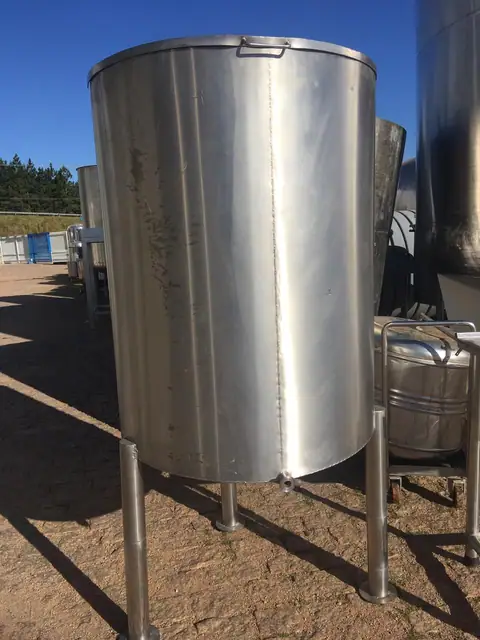
TA1585 · 304 stainless steel tank, 850 L
304 stainless steel tank, 850 liters, with flat heads.
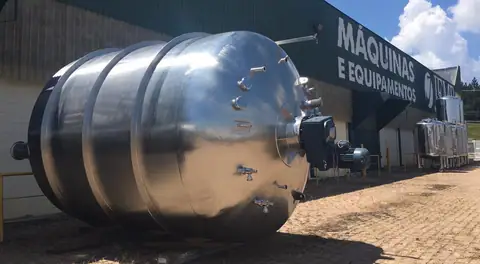
TM0482 · 316L stainless steel mixing tank, 22,000 L, sanitary
316L stainless steel mixing tank, 22,000 liters, sanitary finish, with two paddle sets.
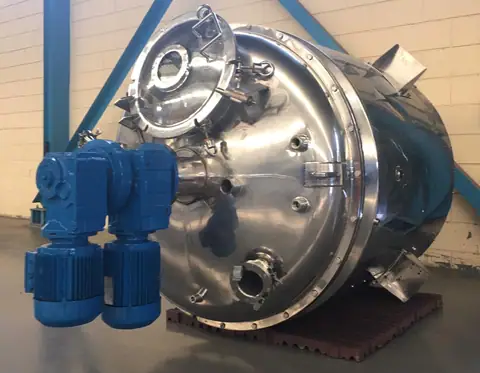
RE0863 · Stainless steel 316L reactor, 1,200 L, sanitary
1,200 liter 316L stainless steel reactor, sanitary finish, with external half-pipe coil, insulation and bottom turbine.